Instructor: Candice Reimer

Candice Reimer
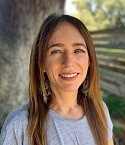
Candi Reimer brings a wealth of experience in mathematics teaching, learning, and social justice math to her work in education. She earned her MS and BA in Mathematics Education from Fresno Pacific University, along with a CLAD Certificate and Mathematics Teaching Credential. Her professional experience includes teaching mathematics at an urban high school, serving as a K-12 instructional consultant, developing curriculum with AIMS Education, and leading professional development for educators. Reimer believes that meaningful mathematics learning begins by connecting instruction to students' interests, experiences, and perspectives. In her courses, she creates opportunities for teachers to explore relevant ideas, engage in practical experiences, and strengthen their professional practice in ways they can apply directly in their classrooms. A Visalia native, she now lives in Fresno and is a member of Woven Community Church. She also brings her background as a classically trained vocalist to her work and life, enriching her appreciation for creativity, expression, and diverse perspectives.

Classes by this instructor


Computational Thinking
This computational thinking online course prepares K-12 educators on how to foster computational thinking through any discipline. Educators will develop practices to support students as they apply this thinking to problems inside and outside of the classroom.

Women in Mathematics and Science
Discover the remarkable achievements of women in math and science and be inspired by their resilience in the face of obstacles and prejudice. This course, designed for teachers of grades 3 through 12, explores the reasons behind the ongoing underrepresentation of women in STEM fields and provides educators with compelling stories of trailblazing women who have paved the way for future generations.

Using Literature to Teach Mathematics
Have you wondered how to capture the excitement of children's literature for the purpose of teaching mathematics? A great story can become a springboard for teaching or reinforcing a mathematical concept. Learn how the linking of mathematics and literacy effectively enhances children's learning. Ideas and sample lessons will enable you to design and teach activities appropriate for K-6 grade levels.

Writing in the Mathematics Classroom
Learn how to teach K-12 students to reflect, share ideas and understand the meaning of math through writing. Teach students to explain and justify their thinking to others. Writing helps them organize their thoughts and procedures clearly. Writing in the mathematics classroom also provides opportunities for students to rethink explanations as peers listen and respond.

Creating Innovators: Book Application
How do we cultivate young people who are imaginative, inquisitive, innovative, and intrinsically motivated? In his inspirational book, Creating Innovators, education expert Tony Wagner explores practices that nurture passion, play, and purpose in the society-shapers of tomorrow. Creating innovators doesn't take an immediate overhaul of the school system. Wagner offers small, practical steps readers can take to shape cultures of innovation.

Playful Learning: Putting Play to Work In the Classroom
From first steps to alphabets, all children are born with a natural inclination to learn. Although most educators are familiar with the merits of play, many schools struggle to put play to work for classroom learning. This fully online course will introduce teachers to playful pedagogies that support academic learning at any level. Play-oriented lessons provide students with opportunities to imagine, create, ask questions, take risks, and collaborate.

Making Thinking Visible
Discover a set of flexible teaching practices for making students' thinking visible. Developed through decades of research at Harvard's Project Zero, visible thinking establishes classroom routines that help students learn how to think. When students are able to make their thinking visible, teachers can better guide learning for deepened understanding.

Mindfulness for Teachers
Mindfulness is an approach that helps teachers and students navigate the social-emotional challenges of the classroom. For teachers, mindful awareness cultivates a compassionate 'noticing' of the internal and external experience of teaching. Teachers who both sense and observe these experiences can respond to classroom circumstances rather than react to them.

Mindfulness Activities for the Classroom
Mindfulness is the awareness and acceptance of each present moment in time. Mindfulness can be cultivated by paying attention to thoughts, feelings, senses, and surroundings. Neuroscience research shows that the practice of mindfulness grows connections in the brain that improve the ability to self-regulate emotions, thoughts, behavior, and attention. This is welcome news for teachers and their students as they co-navigate the many opportunities and challenges of school.

The Mindful School
Mindfulness is a practice increasingly making its way into schools. Mindfulness can be defined as "the awareness that arises through paying attention, on purpose, in the present moment, non-judgmentally" (Dr. Jon Kabat-Zinn). Cultivating mindful awareness through exercises of attention, noticing, and compassion has been shown to rewire our brains in ways that make us happier, calmer, and energized.

The Happy Classroom: Practicing And Teaching Well-Being
Discover evidence-based techniques to foster happiness and overcome obstacles to well-being. Designed for educators, this course offers a blend of personal growth and professional strategies, equipping you to apply the science of happiness within educational environments.

Great Mathematicians Before 1700
Surprise and excite students as they discover mathematics come from real human beings like themselves. Learn how to take the fear and apprehension out of mathematics. The stories behind mathematical discoveries are fascinating but rarely told. When students learn how persons like themselves have discovered and shaped mathematics, their interest and motivation grows. This course examines the lives and work of great mathematicians who lived before 1700.

Great Mathematicians After 1700
Explore the stories behind mathematical discoveries which are fascinating but rarely told. When students learn how people like themselves have discovered and shaped mathematics, their interest and motivation grows. Share with students the stories about mathematicians and engage in problems similar to the ones these mathematicians worked with, which opens the door for students to see how mathematics is inter-connected.

Patterns and Problem Solving
Many of us already know that problem solving can be an exciting, exhilarating adventure. Students who have caught this enthusiasm may simply be given a problem and "turned loose" to see what they can find. Others, frustrated by lack of direction or insecure about process, will find the activities in this course guiding them towards success. With just a little help, every student can make some significant discoveries about mathematics.

Recreational Math for the Classroom
Through this 100% online professional development course, educators will discover how recreational mathematics is real mathematics but presented in a context that makes it engaging, interesting, and challenging. The regular use of mathematical recreations throughout the school year can serve to convince students that math can be exciting and rewarding.

Teaching First Year Algebra
Faced with teaching first year algebra? This course provides useful ideas, strategies and resources for teachers of first year algebra. The ideas, approaches and strategies in this course should make teaching first year algebra less abstract and more satisfying to both teacher and student. Participants will be asked to read several articles and to experiment with a variety of creative approaches to make algebra concepts more concrete.

Patterns and Relationships (K-2)
Discover how to use hands-on materials, real-world problem-solving and playful activities to support number concepts while introducing students to the building blocks of Algebra. This course will help you extend primary students' experiences with numbers through the use of patterning, number relationships, and graphing.

Assessing Students' Mathematics Learning
Do you find it challenging to develop assessment tasks that measure student thinking and understanding? If so, you're not alone. Authentic assessment--the kind that tells us what students know, what they've learned, and how they are relating to the math content--can be one of the keys that unlocks powerful teaching and learning in the classroom.

Virtual Manipulatives
Investigate virtual pattern blocks, geoboards, function machines and more. This online course will introduce teachers K - 12 to the world of virtual manipulatives. You will compare and contrast virtual manipulatives to traditional manipulatives and discover ways to integrate them into their standards-based mathematics instruction. You will become familiar with current research on the use of computer-based virtual manipulatives in the classroom.

Patterns and Relationships (3-5)
Discover captivating activities, use manipulatives and real-world problem-solving to support number concepts while introducing students to the building blocks of Algebra. This online course will provide you with numerous opportunities to reflect on current research and pedagogy related to algebraic thinking in the intermediate grades. Make direct application to your own classroom through the design and development of lessons that explore growth patterns, tables, variables, and coordinate graphs.

Developing Algebraic Thinking (6-8)
Discover how to support deeper understanding of foundational algebraic concepts in grades 6-8. Teachers will explore growth patterns and functions, variables, linear relationships, and coordinate graphs. Based on the text and research-based journal articles, teachers will design and implement a unit of grade-level appropriate algebraic thinking activities with their students.

Teach Math to English Language Learners
This fully online course provides teachers with effective techniques for engaging English language learners, also called multilingual learners, in rigorous mathematics learning. Participants will explore the ways that language proficiency and cultural background can shape mathematics learning and achievement. The course provides strategies for supporting language development and cultural awareness as well as methods to foster a learning environment that encourages participation and engagement.

Technology-Enhanced Math Learning
The activities in this online course will provide you with multiple opportunities to deepen your understanding and apply insights to your own teaching. Designed to provide you with a foundation for using technology to enhance students' mathematics learning in your classroom, participants in this course will examine best practices for technology-based mathematics using dynamic calculators, digital games, virtual manipulatives, interactive online tools, and more.

Fostering Math Discussions
Discover powerful ways to engage students in mathematics discussion. This online course will explore principles of productive talk and specific techniques that will get your students talking about math. Collaborate with online colleagues as you add useful strategies to your math talk toolkit. All of the readings and activities are built upon the Common Core standards. Teachers may complete this course with or without students.

Common Core Math Practices
Discover how to engage your students in the Common Core Standards for Mathematical Practice. In this course, you will explore specific strategies for developing mathematically proficient students who reason, apply mathematics to problems and communicate precisely about their thinking. Opportunities for online collaboration and resource sharing make this course a powerful vehicle for professional growth and classroom change.

Mathematics for Social Justice
Social justice awareness can be utilized in lessons in the classroom. This online course will introduce you to specific strategies for engaging students in mathematics lessons and activities built around social justice issues, such as healthy eating, living wages around the world, access to clean water or fair trade.

Use Rich Math Tasks in the Classroom
The goal of this online course is to introduce you to strategies to enrich your students critical thinking skills by engaging in meaningful problem solving using rich mathematical tasks. The eight Common Core Standards for Mathematical Practice require students to think critically as they apply their skills and knowledge to mathematical situations. Rich tasks present students with the opportunity to conjecture and reason, explore and model, collaborate and communicate about mathematical thinking.

Improving Fluency with Number Talks
Do your students struggle with math facts? Are you looking for practical methods that go beyond memorization? This online course will introduce you to number talks, a classroom routine that engages students in the use of strategies that support number flexibility and fluency. During number talks, students explore and discuss number structure and relationships for mentally calculating addition, subtraction, multiplication, division, fractions, percents and decimals.

Culturally Responsive Mathematics Teaching
Students bring a rich variety of cultural backgrounds and identities to classroom learning. Research suggests that teachers who value student culture and experience are better able to foster academic success, cultural competence, critical citizenship, and caring relationships. Culturally responsive mathematics is a pedagogy that seeks to energize the relationship between students' home and community culture and classroom mathematics learning.

Art-Enhanced Mathematics
Integrating the arts into mathematics learning allows students to experiment with shape and form, investigate abstract concepts with concrete materials, and approach problems from multiple perspectives. Students realize that mathematics can help them order and understand the natural world. At the same time, art invites students to participate in the creative playfulness and aesthetic expression so often missing in classroom mathematics.

Teaching Math Online
Remote technologies that connect people have expanded the ways we teach and learn. Many schools are embracing digitized education through blended and online offerings. With a higher prevalence of remote learning, it's increasingly important for educators to develop pedagogical approaches that maximize benefits for online learners.

Routines for Mathematical Reasoning
Routines help us develop healthy daily habits, math classrooms establish routines for lectures and homework, fewer offer specific daily routines to help students think, communicate, and reason like mathematicians. If your students struggle to get started on mathematical tasks or if they rely on teacher examples in order to 'do problems', this course offers an exciting set of practices to foster confident mathematical thinking.

Building Thinking Classrooms
Transform your classroom with 14 evidence-based teaching techniques to optimize student thinking. This course explores the principles and practices outlined in Peter Liljedahl's Building Thinking Classrooms in Mathematics-a teaching framework developed over fifteen years of research in more than 400 classrooms. Math teachers are inundated with ideas about what works in the classroom. Liljedahl put teaching strategies to the test, identifying the moves that genuinely foster student learning.

Inspire STEM Learning
Through this course, educators will explore the rationale and specific strategies for selecting, planning, implementing, and assessing lessons that develop the disciplines of science, technology, engineering, and mathematics (STEM) in their students. This course will introduce teachers to an interdisciplinary approach to learning that engages students in relevant, rigorous, real-world, STEM-focused problem-solving.

Coding in the Classroom
Spark curiosity and creativity with coding in your classroom! Coding goes beyond writing computer instructions; it's a mindset that fosters ingenuity, logical reasoning, and systematic problem solving, making it a valuable skill in all areas of life. This course empowers K-12 educators to teach coding fundamentals and seamlessly integrate them into their curriculum.

Makerspace: Technology and Tinkering
A makerspace is an area or areas where students come to explore, build, create, and tinker. Tinkering is an iterative process in which students question, explore, experiment, and evaluate their progress toward a specific goal. A makerspace may look different in different classrooms and the area may include different materials throughout the year.

Teaching Robotics: An Introduction
Today's app-enabled robots are more user-friendly than ever, geared towards learners of all ages and levels of experience. Robotics learning develops 21st century STEM skills including coding and engineering as students engage in play, innovation, creativity, critical thinking, problem solving, and collaboration.

Teaching With Scratch
Scratch is a free, easy-to-learn computer programming platform that enables users of all ages and abilities to design creative projects. Using brightly colored drag-and-drop blocks, Scratchers can construct games, animate stories, illustrate simulations, and more.

STEAM-Propelled Learning
STEAM is an educational approach that integrates science, technology, engineering, arts, and mathematics through project-based, interdisciplinary learning. Drawing on design principles and art practices, STEAM adds to the strengths of STEM learning through increased opportunities for critical inquiry, collaborative exploration, creative design, adaptable problem solving, and real-world application.

Developing Data-Literate Students
Data compile every second of the day. These "big data" can be used to better understand and constructively shape the world around us. The top emerging jobs will require professionals to understand how to locate, analyze, and leverage data. Data competence is now an essential life skill. This course serves as an accessible introduction to data literacy in the classroom.

Squishy Circuits
Combine sculpting, art, and electrical circuits for kinesthetic STEM learning! Squishy Circuits use LEDs, motors, switches, and buzzers to animate figures sculpted from dough that can be easily made with ingredients at home. Even young learners can use Squishy Circuits to explore concepts like conductivity and resistance, open and closed circuits, series and parallel circuits, and electrical load.

School Gardening
Grow your students' love of learning with a school garden! School gardening cultivates patience, responsibility, and collaboration as students sow and nurture their crops. Students who grow their own food are more likely to appreciate a variety of fruits and vegetables. Gardens expand the walls of the classroom, providing rich opportunities for hands-on learning in science, technology, mathematics, social studies, ELA, nutrition, and the arts.

The Interactive Class: Book Application

Technology has expanded the ways teachers design learning experiences for students, but the ever-growing list of educational tools and apps can be overwhelming for classroom teachers. This book application course introduces teachers to an exciting and versatile set of tech tools through ready-to-use lessons for any grade level, content area, or curriculum.

Show & Tell: Digital Artifacts of Student Learning
This fully online course introduces participants to playful apps and activities to get students excited about sharing what they know through digital artifacts. A digital artifact is a technology-enhanced documentation of student learning. Digital artifacts offer teachers an alternative to traditional assessment methods and an opportunity to know their students through creative personalized assignments.